Distribution by year
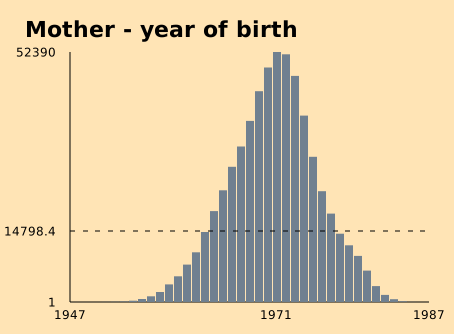 Here, birth dates are grouped by year.
Distribution by day
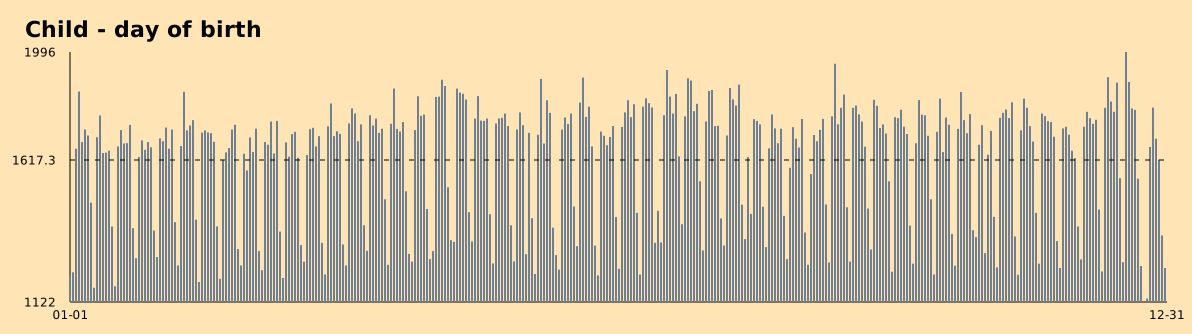 The dates are grouped in 366 bins of 1 day.
In this example, we can see that there are less births during the week-ends.
Planetary positions
For each planet, we represent the distributions of their positions (ecliptic longitudes).Data are grouped in 360 bins of 1 degree.
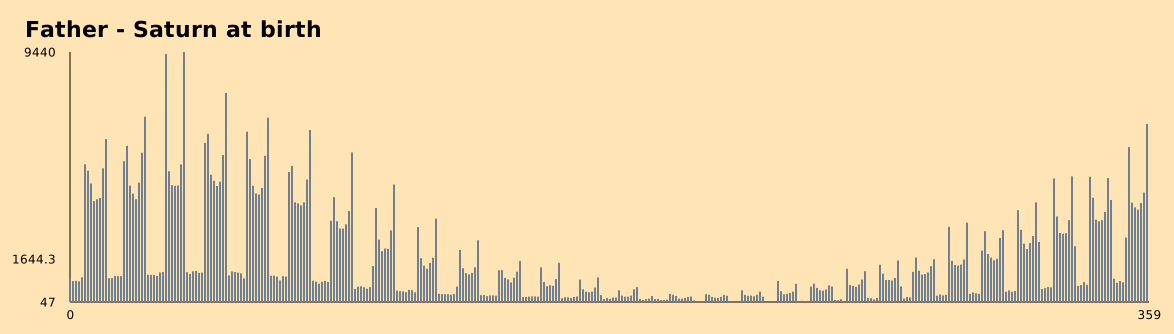 It sometimes shows strange distributions, expressing astronomical or demographical condiderations.
This gives one distribution per planet.
Planetary aspects
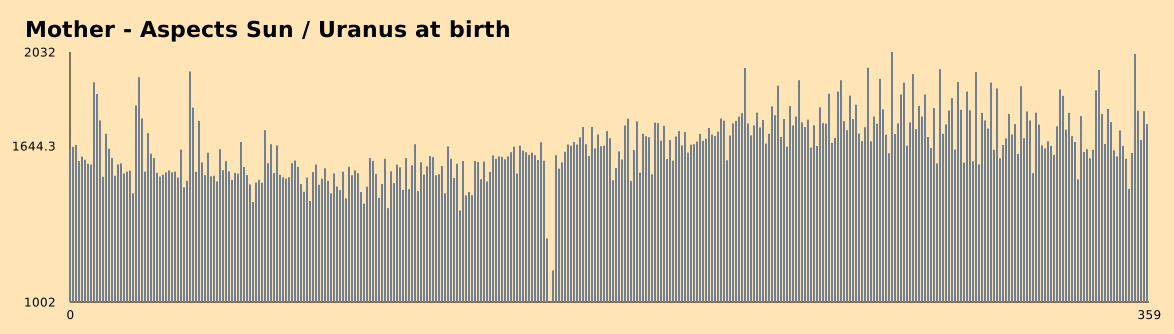
For a given date, we compute the planetary positions, and we consider the angles between 2 planets. These angles are called aspects.They also vary from 0 to 360 degrees.
Hierarchy "distrib1"
As explained in the page about distributions,- A distribution representing a single quantity (here distribution by year, by day, and planetary positions) can be represented by an 1-dimensional array (abbreviated dim1).
- A distribution involving two quantities (here planetary aspects) can be represented either by a 1-dimensional array or by a 2-dimensional array (abbreviated dim2).
distrib1
    ├── positions
    │   ├── SO
    │   ├── ...
    │   └── NN
    ├── aspects
    │   ├── dim1
    │   │   ├── SO-MO
    │   │   ├── ...
    │   │   └── PL-NN
    │   └── dim2
    │       ├── SO-MO
    │       ├── ...
    │       └── PL-NN
    ├── day
    └── year
This hierarchy is called distrib1.