Date differences
Here are examples of distributions built computing the differences between two dates.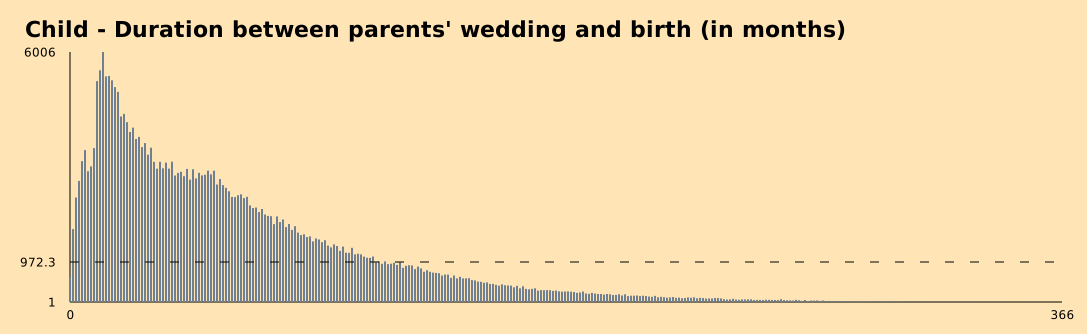
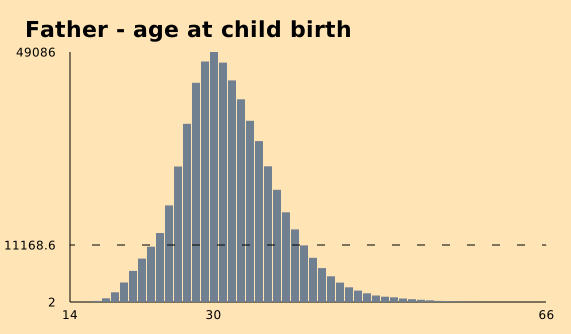
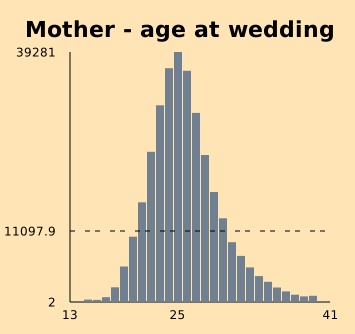
These distributions are called "age" in the context of this program.
Inter-aspects
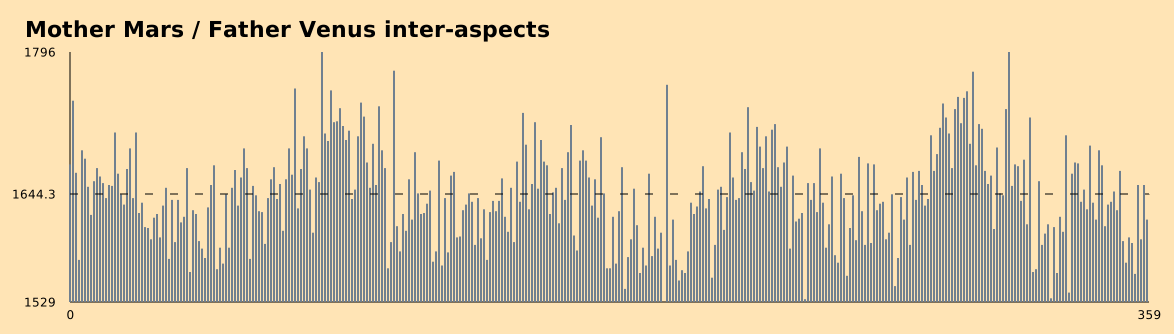
"Inter-aspect" is the name used in this program to designate an aspect (an angle) between planets generated by two dates.For example:
- The longitude of venus at the moment of father birth is 100°
- The longitude of mars at the moment of mother birth is 150°
- Then we say that the inter-aspect between mother's venus and father's mars is 50°
Hierarchy "distrib2"
As explained in the page about distributions,- A distribution representing a single quantity (here distribution by year, by day, and planetary positions) can be represented by an 1-dimensional array (abbreviated dim1).
- A distribution involving two quantities (here planetary aspects) can be represented either by a 1-dimensional array or by a 2-dimensional array (abbreviated dim2).
distrib2
    ├── age
    │   └── dim1
    │       ├── age-M
    │       └── age-Y
    └── interaspects
        ├── dim1
        │   ├── SO-SO
        │   ├── ...
        │   └── NN-NN
        └── dim2
            ├── SO-MO
            ├── ...
            └── PL-NN
This hierarchy is called distrib2.
Next: Distributions